


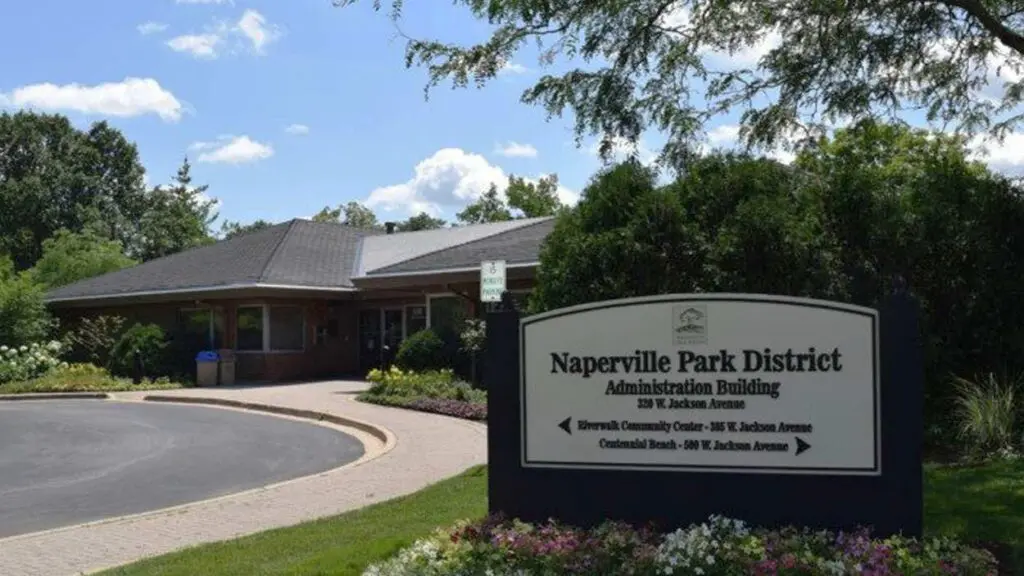
Naperville Park District’s decision-makers will soon vote on a pair of ordinances that lay the groundwork around the intricacies of taking out bonds to fund assorted projects and improvements in the years ahead.
A financial advisor discussed the bond issuances at a park board meeting Thursday, Sept. 24, as a precursor to the formal introduction of a state-required bond parameters ordinance at the board’s next meeting Thursday, Oct. 8.
At the recent board meeting, officials also revealed Moody’s assigned the Naperville Park District a Triple A (Aaa) bond rating, which is the highest score the organization gives to a governing agency.
A bonds for referendum work
The district is planning to take out two separate types of bonds this fall. The A bonds, linked to the district’s successful March referendum to fund a new indoor aquatics center and fitness facility at Frontier Sports Complex, carry a maximum principal amount of $120 million and are the larger of the two.
Andrew Kim, vice president with Speer Financial Inc., was on hand at the park board meeting to discuss the bond issuances and what they mean for the district.
For the A bonds, Kim indicated they would have a final maturity date no later than Dec. 15, 2046. Annual principal associated with repaying the bonds is not to exceed $12 million annually. Additionally, he indicated the interest rate would be capped at 5.5%.
“You cannot impact the repayment structure of the bonds for the first 10-and-a-half years,” Kim said in further explaining the bond parameters. “After that point, once the call date is passed, then you may be able to refund the bonds.”
For taxpayers, the annual levy associated with repaying the A bonds is not to exceed $12.5 million, accounting for principal and interest.
B bonds for ongoing capital needs
The park board held a public hearing on the proposed B bond issuance at the start of the recent meeting to comply with the Illinois Bond Issue Notification Act. The district did not receive any written or oral comments on the planned B bond issuance.
Kim said the B bond issuance is structured in such a way that the maximum principal amount is $13 million.
“It’s going to consist of $5 million for the new money portion that you can allocate toward any projects — capital needs — that you might have,” Kim explained.
As for the balance, Kim added, “The remaining $8 million would be for a refunding portion, which we don’t anticipate happening, given where interest rates are right now. But, at the time of the sale, if the interest rates come down, the board is authorizing administration to move forward with the refunding portion of the bonds, as long as a certain savings threshold is met. That savings threshold is 2-and-a-half percent of the refunding bonds.”
Based on the anticipated parameters ordinance, the annual principal for the B bonds issuance is not to exceed $900,000 annually, and the interest rate has the same cap as the A bonds, at 5.5%. An option to restructure payments is also available in 10-and-a-half years.
As for the tax levy associated with the B bond issuance, it is not to exceed $1.96 million, factoring in principal and interest.
If you have a story idea, we want to hear from you!