


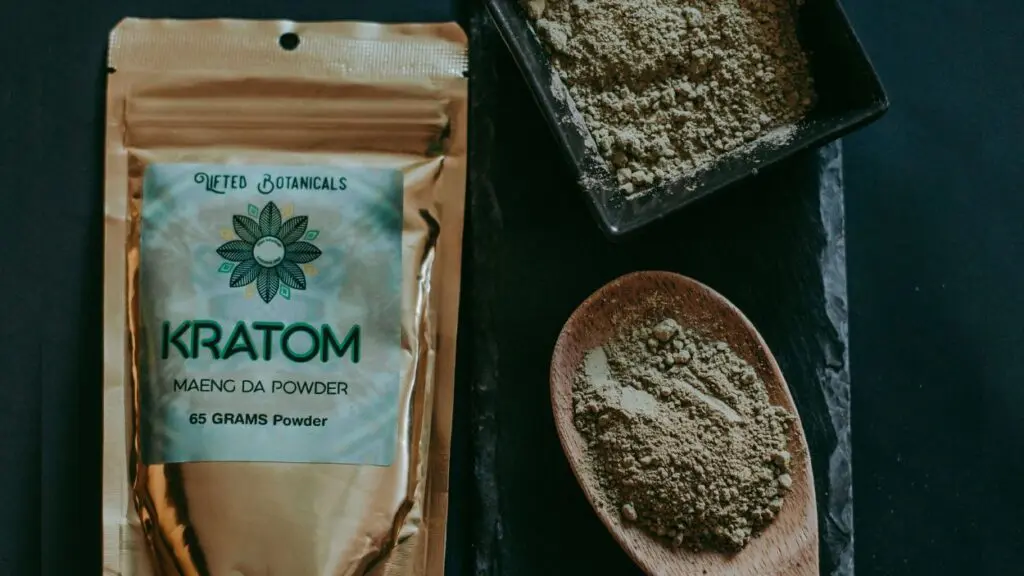
The Naperville City Council is mulling a potential ban on the sale of kratom at all retail establishments within the community.
The city council recently took up a first reading of an ordinance to prohibit the retail sale of kratom. The reading was tabled at the council’s Tuesday, Aug. 18, meeting, and a second reading is slated to return at the next meeting on Tuesday, Sept. 1, for further deliberation.
What is kratom?
Kratom is a drug that has grown in popularity across the country for a myriad of reasons. It is derived from tropical evergreen tree leaves that are native to Southeast Asia.
“The leaves can be brewed as tea, crushed into powder, smoked, snorted, or taken in capsules or tablets,” Jennifer Bonner, senior assistant city attorney, wrote in a memo to the council. “People have used kratom as a mood enhancer, energy booster, and pain reliever, and some advocates claim it may help with opioid withdrawal.”
The U.S. Food and Drug Administration warns against kratom use, Bonner noted in her memo, because of such risks as liver toxicity, seizures, and the potential for substance use disorder.
Naperville Liquor Commission recommended ban
The council’s deliberations around the potential retail sale ban of kratom comes on the heels of a recommendation from the city’s Liquor Commission. On Thursday, July 9, commissioners unanimously recommended the measure.
Discussions around kratom use commonly draw distinctions between natural and synthetic forms, with advocates asserting natural forms are beneficial.
In speaking to the two classifications, City Attorney Michael DiSanto said an outright prohibition around the retail sale of kratom would be the most effective way to regulate its availability within Naperville.
“It’s very difficult for the police to determine whether something they have is reasonable suspicion or probable cause to take something off the shelf because the labels aren’t necessarily accurate,” DiSanto said. “There’s no standard at which they’re holding it to at the lab and how they are going to test it.”
Speaking to the action taken last month, DiSanto added, “I think that’s why the liquor commission had recommended a broad ban, in order to encompass everything, rather than try to parse between the synthetic and the natural products.”
This is the second time Naperville officials are addressing kratom. In 2019, the council adopted an ordinance restricting youth access to the drug.
More recently, a number of Illinois communities have introduced retail sale bans, with ordinances in place that are similar to the proposed one in Naperville. The list of communities includes nearby Plainfield, as well as Bloomington and Winnetka.
Speakers on both sides of argument weigh in on kratom
The Naperville City Council heard from more than a half-dozen speakers on kratom at the recent meeting, with arguments made on its availability on both sides of the issue.
Colin Czubaruk of the Arlington, Va.-based consumer advocacy organization American Kratom Association came to Naperville to speak about the drug and his opposition to the city’s proposed ordinance.
Czubaruk in his comments noted the U.S. Food and Drug Administration has been running tests on kratom use. One such test, he said, was what he described as “a single-ascending dose study” that entailed “healthy humans” using up to 12 grams of natural kratom.
“In these tests, it found no dangerous adverse effects, with only in the very late stages, 8 grams and up, showing slight nausea, which is to be expected from taking a bitter substance in such high dosage in such a small amount of time,” Czubaruk said.
Wauconda resident Ila Webster also was among the group of advocates and came to Naperville from her Lake County residence to speak in favor of kratom allowances. Webster said she deals with chronic pain, and kratom has helped make it tolerable.
“Natural kratom leaf does not suppress my breathing when I need it,” she said. “It allows me to continue my daily exercise program, walk 5,000 to 6,000 steps everyday, and I tap dance.”
But other speakers, including Naperville resident Kelly Douglas, spoke in favor of the city’s proposed ordinance, as written. In her public comments, Douglas indicated she witnessed a close friend struggle with addiction and expressed concerns about marketing kratom.
“I believe one of our most important responsibilities is to protect the public health and safety of our community, particularly when we see an emerging problem and trend,” Douglas said. “We have an opportunity to act, before the problem becomes a larger one.”
Ari Bernstein, a licensed clinical social worker at Mill Street Behavioral Health, said he has treated patients struggling with kratom addiction, alongside cocaine, opioids, heroin, cannabis, and alcohol.
“Over the last five years, I’ve grown to learn how to treat kratom use disorder,” said Bernstein, who also spoke in favor of the ordinance. “I don’t see any difference between kratom and kratom products, as I do from the rest of the substances.”
Local public safety officials also provide input
During deliberations at the recent council meeting, Naperville Police Chief Jason Arres and Naperville Fire Chief Mark Puknaitis each gave their take on kratom and its impact within the respective departments.
“What I can tell you is that if you look at the data, I would classify this as more of a public health and consumer safety issue than I would a crime issue,” Arres said. “Our data plays out that way.”
But in keeping with the public health aspect of the concerns, Arres also offered other statistical information.
“What I would draw attention to, from the police perspective, and where it lines up with the public health perspective, is, in the last four months, we’ve had four overdoses, and one fatal that a coroner attributed to kratom usage,” Arres added. “We had another mental health-related call, where someone was taking kratom, so we are seeing the calls, but not necessarily criminal.”
Addressing overdoses of all types are common within the fire department, Puknaitis said, but kratom has not registered within the agency at this point.
“Kratom doesn’t necessarily rise to any top of the list,” Puknaitis said. “We haven’t been alerted by our people that we have seen a high call volume for kratom itself.”
Council members weigh in with different thoughts as well
During deliberations, council members gave different takes on how to move forward on the proposed ordinance.
Councilwoman Mary Gibson made the motion not to waive the first reading and instead have a deeper analysis take place before it returns for the second reading on Sept. 1.
“I think we’ve heard pretty consistently from the community that there’s a difference from synthetic kratom and natural-leaf kratom, and these highly-concentrated products that are oftentimes marketed to adolescents,” Gibson said. “I think that natural-leaf kratom and its very real purposes for pain management is also something we should consider, including as a public health concern.”
Councilman Nate Wilson was among the elected leaders on the dais who spoke in favor of Gibson’s proposal.
“I’d like to say, getting more information is better,” Wilson said. “That’s where I’d be at, as far as making a decision today.”
But other council members, including Councilman Ian Holzhauer, said it might be prudent at this point to pump the brakes and proceed with caution on allowances for a drug such as kratom. Holzhauer drew on his professional experience, reciting drug-related legal cases he was a part of two-plus decades ago.
“I feel like, if I could go back in time, my plea to the policy-making community would have been, ‘Let’s slow down a little bit. Let’s learn and, frankly, be a little more restrictive,’” Holzhauer said.
Councilman Benjamin White said he, too, would be in favor of a complete ban on the retail sale of kratom.
“Quite frankly, our top responsibility, as a council, the men and women up here, is public safety,” White said. “We talk about fire and police all the time, but when it comes to public health as well, this falls right in line with that for me, so I will support that.”
At the conclusion of the deliberations, Mayor Scott Wehrli urged the council to take action on the proposed ordinance at the upcoming Sept. 1 meeting.
“I think, having one dead person in our community whose autopsy report indicates kratom as a cause of death is pretty significant, and having four additional overdoses, as the chief described from recent times, should wake us up and take action,” Wehrli said.
Stay in the know, sign up for our daily news update!