
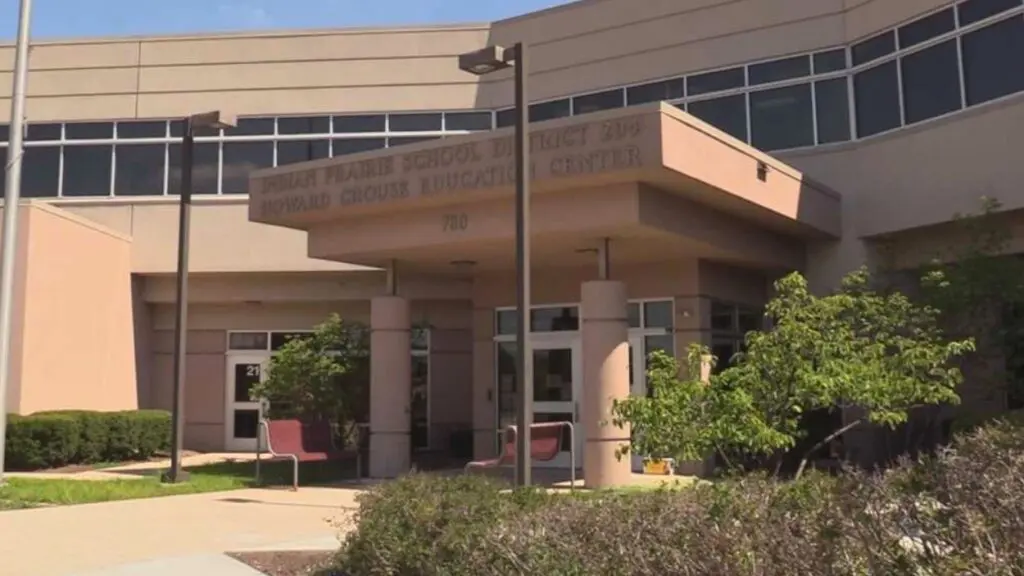
Facing a $1.2 million cut in federal funding, high substitute teacher spending and increasing expenses to serve students with autism, Indian Prairie School District 204 is projecting a $4.9 million deficit in next year’s budget.
The district anticipates the shortfall to be a “one-time deficit,” with forecasts returning to balanced budgets beginning the following year. But the funding challenges in 2026-27 are expected to result in a reduction of roughly 20 full-time-equivalent positions from this year’s staffing numbers, administrators told school board members during the Monday, May 18, meeting.
Working to decrease effects of federal funding cut
The cut in federal funding comes from the Title I program, which provides supplemental funding to support “low-achieving children, especially in high-poverty schools,” according to the U.S. Department of Education.
Matt Shipley, chief school business official, said the district’s poverty rate dipped below 5%, according to the Census data the federal government uses to determine eligibility for Title I funding, which has helped support positions such as math interventionists at schools with higher concentrations of low-income students.
“Are we looking into ways to still academically help these students?” school board member Catey Genc asked.
“The answer is yes,” Superintendent Adrian Talley said. Losing $1.2 million is “impactful,” Talley said — no way around it. But “I know we have the right people in the schools, the right staff who are doing all they can to ensure the success of our children.”
Property tax boost to help offset federal funding loss
One positive factor to offset the loss of $1.2 million in Title I funding comes from local property taxes, Shipley said. New development within Indian Prairie boundaries came in at $25 million higher than projected, he said, resulting in an additional $1 million in property tax revenue for the district.
Still, because of other issues such as the high costs of bus transportation and substitute teachers, the district plans “$2.7 million in reductions from baseline” spending for next school year, resulting in a projected $472 million budget.
To help decrease expenses, the district will no longer offer busing for preschool students beginning next school year, school board President Laurie Donahue said.
“I’m not happy that we’re doing that,” she said, “but we’re trying to look at the transportation cost.”
The district is also working to address scheduling challenges for teacher training and curriculum development, which can increase the need for substitutes, and to prioritize supports for students with autism.
Advocating for steady school funding
Officials also plan to advocate against funding changes such as the unexpected drop in Title I allocations, which can make it difficult to provide stable support for students, Shipley said. Although the poverty rate dropped below 5%, the district’s actual number of low-income students has decreased by less than 200, and 19.5% of students still qualify based on income for free or reduced-price lunch.
“This has the potential to have a long-term impact on our district, and specifically on the schools and students that were receiving Title I assistance,” Shipley said. “When such a small change in students can create such a disparate impact from a dollar standpoint, that does not create predictable funding.”
Administrators plan to continue adjusting for these financial challenges as they prepare the 2026-27 budget, which is expected to be before the board for approval this summer.
If you have a story idea, we want to hear from you!