
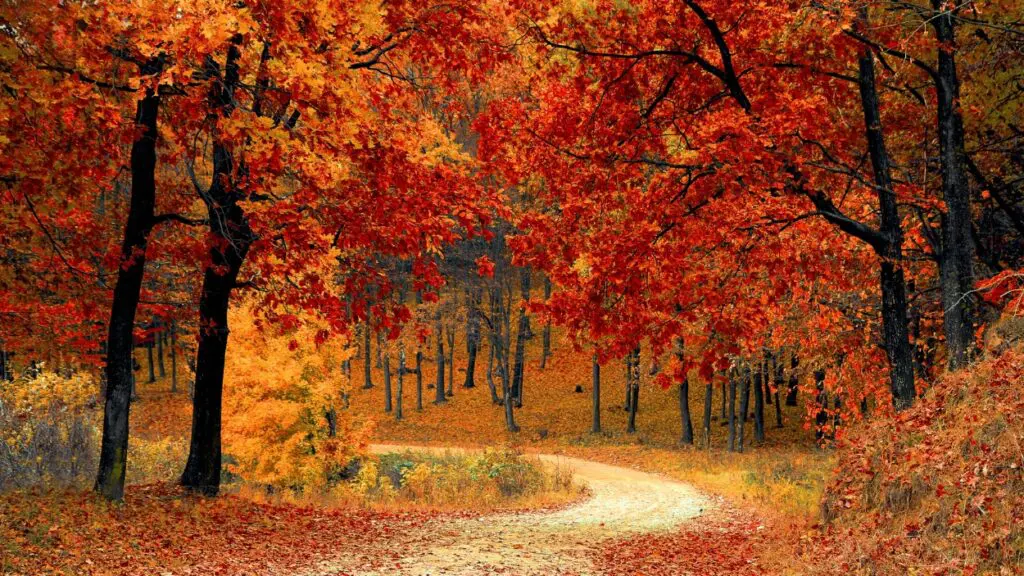
A strengthening El Niño could affect fall leaf color in the Chicagoland area, according to experts at The Morton Arboretum.
About El Niño
El Niño is a warming of the Pacific Ocean’s surface that can impact weather patterns across the globe. Weather experts are forecasting the current super El Niño to be the strongest on record in over 75 years.
Data from the National Weather Service reveals it is expected to cause above-average temperatures for the area for the months of October, November and December.
That, combined with fluctuating weather conditions this summer, may leave a shorter and later window for fall colors to appear this year.
“We saw a lot of weather extremes this summer, from drought to heavy rainfall, which will likely impact trees and their foliage very differently and have isolated effects,” Dr. Christy Rollinson, senior scientist in forest ecology at the Arboretum, said. “The warming impact of El Niño in our region, particularly as we progress toward winter, may result in a compressed fall color season with leaves changing all at once in late fall.”
Rollinson added that drought would typically lead to earlier fall color, but reports by the Illinois State Climatology Office say drought this summer was counteracted by higher-than-average precipitation over the last 90 days.
Monitoring weather patterns
The strengthening El Niño is being monitored by experts at the arboretum, assessing how the timeline of the rest of the fall season may be impacted as a result.
“If this holds, we expect El Niño to delay autumn color in general,” Rollinson said. “But once we see several nights of freezing temperatures that leaves can’t survive for long, their colors will begin to change quickly.”
When do leaves change in Illinois?
The arboretum noted that some trees’ leaves have started to change already, but said these are species that tend to turn early.
Fall colors in some individual trees may also have already popped up in “high-light and high-stress environments” like parking lots.
In general, maples generate their most vibrant color in mid-October, and oaks in late October. In the Chicagoland area, leaves typically stay on trees through early- to mid-November.
Changing light plays a role
Rollins also said the length of daylight is a crucial factor in her team’s review, as tree species respond differently to changing temperatures and light.
“Although our autumn temperatures may become more like southern Illinois’ in future years, the timing of the temperature relative to day length won’t be equivalent, and we don’t know yet exactly what that will mean for the start of the season,” Rollinson said.
Stay in the know – sign up for our daily news update!