Drive-thru-only operations and food trucks could be added to the list of establishments subject to Naperville’s food and beverage tax, based on a proposal under consideration.
The city council had a preliminary discussion about the potential expansion at its Tuesday, Oct. 21 meeting. An ordinance amending the Naperville Municipal Code could be acted on at a forthcoming meeting.
Amendment mirrors changes in restaurant industry
Mayor Scott Wehrli brought forward the proposed expansion at the recent meeting. He noted the amendments would incorporate concepts “that we never even thought about” when Naperville first exercised its home rule authority under state law to implement a 1% food and beverage tax in 2004.
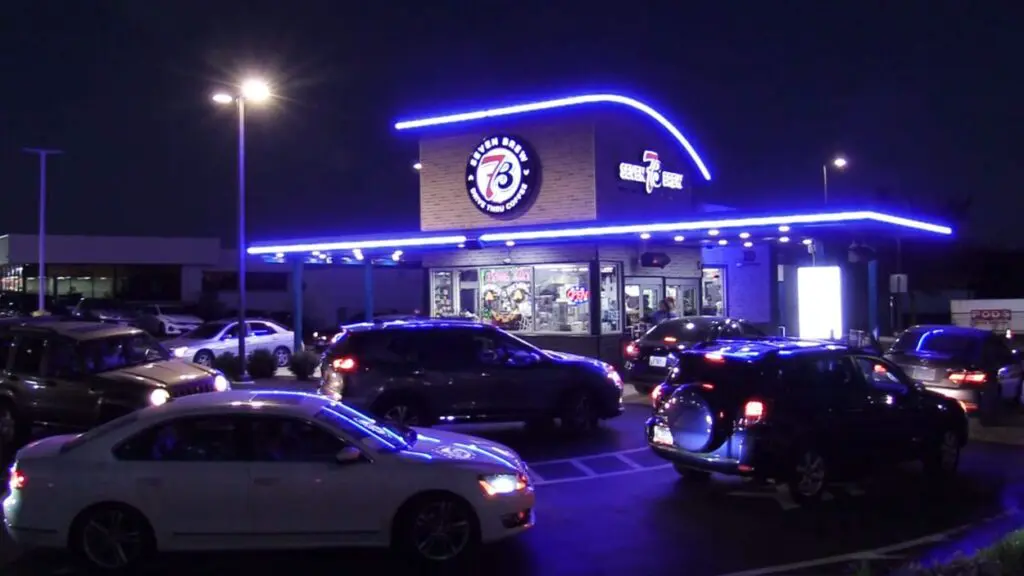
A number of drive-thru-only establishments have been taking root in Naperville in recent years, including such coffee establishments as 7 Brew and Scooter’s Coffee. Chick-fil-A and Dunkin’ Go also have brought stores under this concept to Naperville.
Additionally, Wehrli said he sees merit in including food trucks in the ordinance, which have also gained popularity in the past two decades as consumers have favored quicker, grab-and-go options.
“The optics here are that food trucks get a better deal than those restaurants or folks who actually invest and pay real estate taxes into our community,” Wehrli said.
The council, in general, was receptive to bringing drive-thru-only operations into the mix of businesses privy to the food and beverage tax.
“It’s certainly not fair, I think, to have brick and mortars that are not paying in, just because they’re drive-thru-only, so I think this is a needed update in that regard,” Councilman Patrick Kelly said.
“There is a fairness issue to it,” Councilman Benjamin White added.
Enforcing mobile food truck taxes could pose challenges
While Wehrli brought food trucks into the conversation, he and other officials noted a tax enforcement for this concept might be more challenging since these establishments are inherently mobile and, in many cases, do not do business exclusively within Naperville.
“I’m not necessarily talking about food trucks who pop into Naperville once and leave town,” Wehrli said. “I’m more interested in food trucks that set up shop here and literally run a restaurant out of a parking lot either all summer or all year and are directly competing with our brick-and-mortar restaurants.”
At the recent council meeting, there was discussion of when the food and beverage tax might apply to food trucks. Establishments that only operate within the city a few times a year during special events, for instance, might be exempt.
Finance Director Raymond Munch said a cursory analysis of how other Illinois home rule municipalities implement food and beverage taxes was conducted. He said he plans to return back with a deeper look at the comparisons at an upcoming meeting.
“We have found, as you would expect, different applications in different communities,” Munch said. “There are certainly communities that are including food trucks in their food and beverage tax ordinances. There’s other cases where it’s a little bit more silent, so it’s an interpretation.”
Based on the show of support at the council meeting, different options will be presented for the food truck scenario before any action is taken.
Food and beverage tax helps fund SECA programs
As Munch noted in a memo, the city’s 1% food and beverage tax is used for a variety of purposes, including the Special Events and Community Arts grant program.
“Over time, the food and beverage tax revenue has grown to support other needs, including public safety pensions, social service grants, supplemental support for Naper Settlement and abating property taxes for debt service,” Munch wrote in the memo.
If you have a story idea, we want to hear from you!