
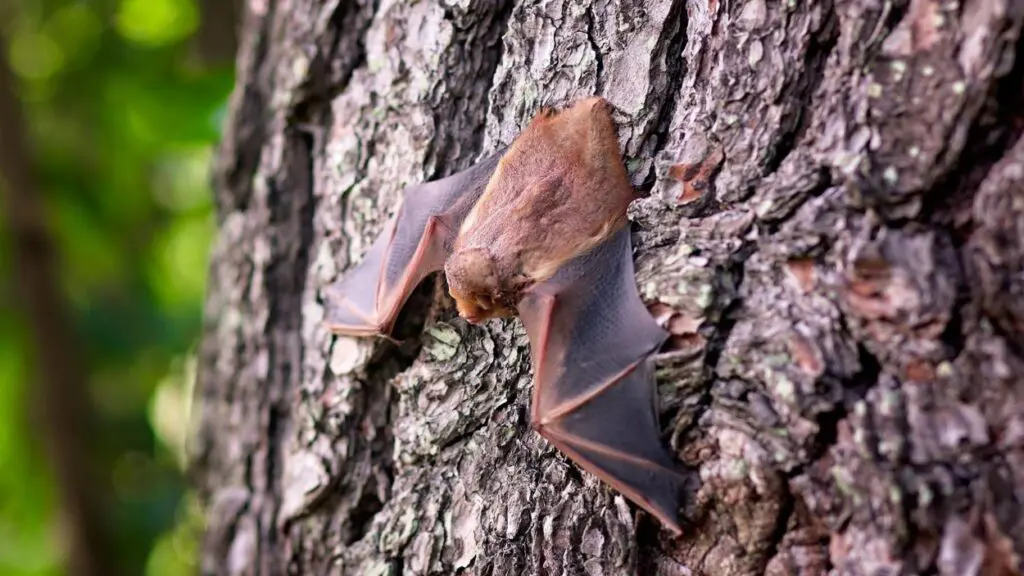
The DuPage County Department of Health is reminding the public to steer clear of bats, which are currently in their most active time of year.
Why bats can be dangerous
Bats can carry rabies, a deadly viral disease affecting the central nervous system and brain. According to a news release from the DCHD, humans can be infected with the disease through an infected animal’s saliva, which can be transmitted via a bite or if the saliva gets into a person’s eyes, mouth, nose, or an open cut.
For that reason, the DCHD advises avoiding touching or trying to catch a bat, or any other wild animal.
What to do if bitten or exposed to a bat
Health officials say those who are bitten or exposed to a bat should seek medical care immediately. Without preventative treatment, rabies is almost always fatal.
Finding a bat in one’s home can be counted as exposure, particularly if the person was asleep, children were around the bat with no adults present, or if the bat was by someone who was intoxicated, or not able to communicate clearly.
The DCHD notes that bats are the main source of rabies in Illinois, though other wild animals can carry and spread the disease as well.
Any exposures to rabies in DuPage County should be reported to the DCHD at (630) 221-7553 or after hours at (630) 682-7400.
Humans who are bitten by animals need to report the bite to DuPage County Animal Services either via email or by calling (630) 407-2800.
Tips for rabies prevention
To help with rabies prevention, the DCHD offers the following tips:
- Keep pets up to date on rabies vaccines
- If a pet is bitten by a wild animal or exposed to a bat, take it to a veterinarian immediately
- Report any concerns about stray pets to local non-emergency police or 911 to get to the right agency
- Do not rescue or keep wild animals
- Tell children to “love your own pets; leave other animals alone”
- Close any openings to your home
- If a bat is found in your home, contact animal control and public health for guidance.
- If a bucket can be safely put over the bat, do so and close the door to the room.
Human cases of rabies are rare
The DCHD said this year, two of the 48 bats sent in for testing in the county were found to be positive for rabies. Additionally, 82 residents were advised by either the health department or a healthcare provider to get preventative treatment after potential exposure to a bat or other animal.
Human cases of rabies in Illinois are rare, with the last case reported in 2021, contracted by a man in Lake County. Before that, the most recent case had been in 1954.
Stay in the know – sign up for our daily news update!