
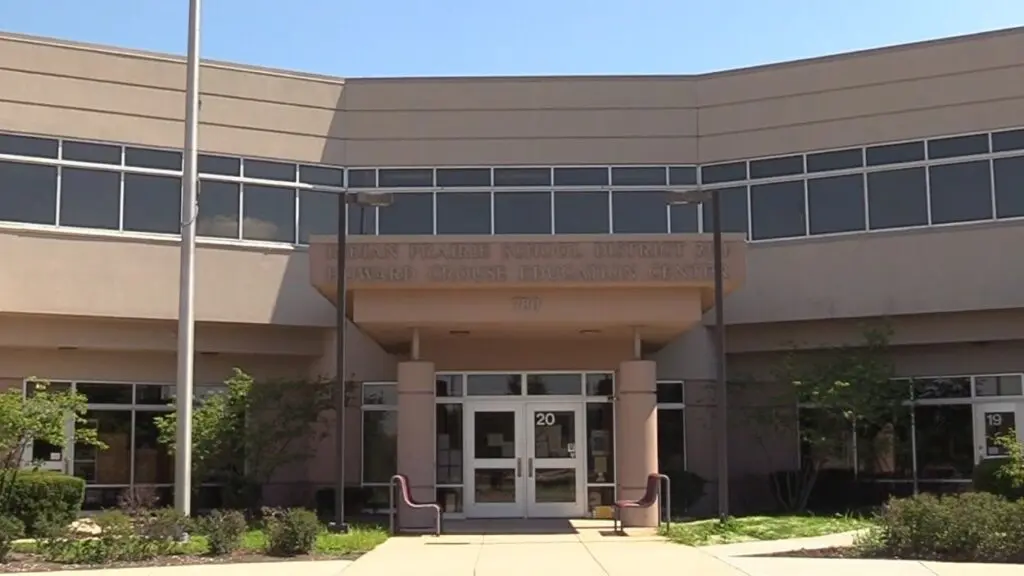
Indian Prairie School District 204 projects a $5.8 million deficit for the 2026-27 budget, but officials say they’re in a good position to navigate the shortfall because of their history of strong financial management.
School board President Laurie Donahue said the district plans to use reserves to cover the deficit in this year’s budget, which administrators are preparing for approval during a meeting on Sept. 28.
But the gap between revenue and expenditures is small, at roughly 1.2% of the district’s $476 million operating budget, and is expected to be short-lived, Chief School Business Official Matt Shipley said in a presentation at the latest school board meeting.
“Our expectation is to have a balanced budget for next school year,” Shipley said.
What caused the budget deficit
Several factors have contributed to this year’s projected shortfall, Shipley said.
“State and federal funding losses, cost increases in key budget areas and our desire for targeted expenditures to continue to support our students and support our areas of greatest need” are the main causes, he said.
The district learned in April that its federal Title I funding would decrease by $1.2 million. The drop came because the district’s resident population fell below a 5% threshold of people qualifying as low-income, according to U.S. Census data. One of the main goals in the budget is to minimize the effects of this loss, Shipley said.
The district is now funding $240,000 of expenditures typically covered by Title I with local sources. The district also is continuing its support of smaller class sizes at Title I-recipient elementaries, which has been a priority since about 2018.
“That’s about a $600,000 investment annually, and we are continuing to make that investment,” Shipley said.
This year’s budget is absorbing two new union contracts, and increases in the cost of certain services — such as health insurance for employees and transportation for special education students who need resources out of the district — rising faster than inflation.
How district plans to balance future budget
Shipley said the district plans to review “targeted efficiencies” this year to ensure balanced budgets next year and beyond.
He said one of the projects being funded through the Safer, Stronger 204 referendum — the return of freshmen to Neuqua Valley High School from the Birkett Center — is anticipated to save about $2 million a year beginning in 2027-28.
The district is also undergoing a process, with the help of a consultant, to review more than 200 initiatives to determine their complete cost and “Academic Return on Investment.” Shipley said administrators expect to bring forward results from this analysis this fall to help prioritize future spending.
A move made earlier this month to reduce pay for retired teachers working as substitutes is also expected to save needed dollars. And the district aims to reduce its need for subs by looking to schedule teacher training, curriculum planning and meetings during times when subs aren’t required.
IPSD spends less per pupil, employs fewer admins
School board members said they’re pleased the district is thoroughly reviewing expenditures and planning the best ways to spend in the future. They praised some of Indian Prairie’s financial stats — such as its status as the district with the lowest student-to-administrator ratio in Illinois, at 95 administrators for about 25,100 students, and its per-pupil annual spending of about $17,000 a year, compared to roughly $23,000 spent by comparable districts like Barrington Unit District 220.
“We do a lot of things great here in 204, and I’m happy that this is only a temporary deficit,” school board member Mark Rising said.
The board also decried the district’s continued status as 80% funded, according to the state’s evidence-based funding formula, instead of a full 100%.
“We have to continue to look for ways to tighten our belt,” Donahue said.
Budget supports special ed, leaves 32% reserves
Within this year’s budget, priorities include supporting an increasing population of students with special needs, including those with autism. The district has hired an additional 15 full-time-equivalent positions in special education for this year and also plans to spend 18% more to transport students to out-of-district facilities.
Pending school board approval next month, the budget will leave the district with 32% of annual operating expenditures in reserves, after using some reserve funds to fill the deficit. That’s above the 25% required by board policy and serves to protect the district from unexpected changes in funding, officials said.
If you have a story idea, send us a tip!