
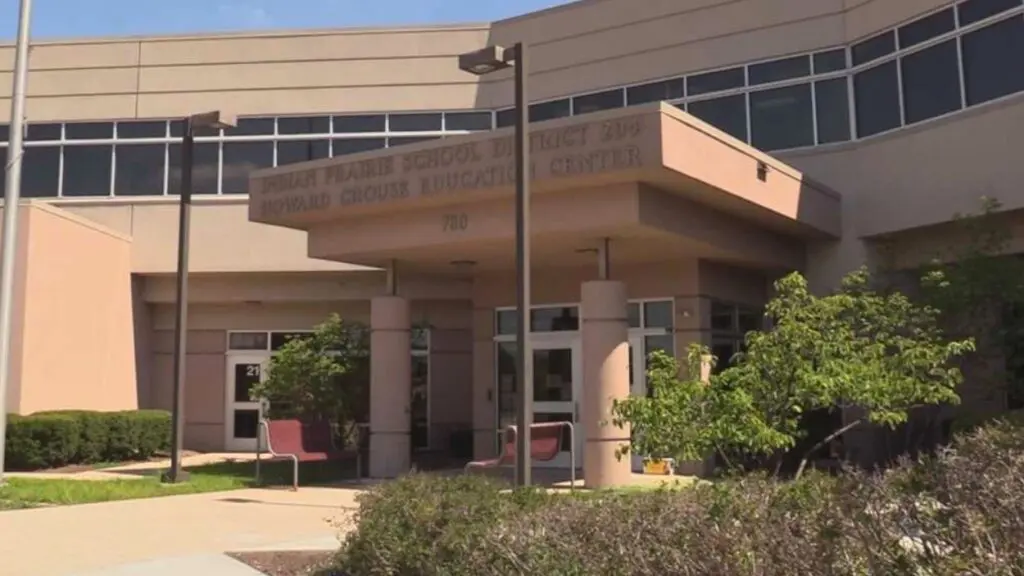
Indian Prairie School District 204 is serving an increasing number of students with autism and specific learning disabilities, so administrators are refining the best ways to serve these growing student populations.
Under Assistant Superintendent for Student Services Christine Igoe, who’s in her first year with the district, Indian Prairie is seeking ways to remove barriers that may prevent students with disabilities from accessing general education classrooms.
“I encourage you to keep looking at that,” school board member Mark Rising said. “We want kids in the general education environment as much as we can, but that also takes resources. I appreciate that you’re looking at what can be accomplished.”
It’s all part of a Student Services department that operates by presuming competence among students, being inclusive and responsive to student needs, and helping all students make meaningful progress, Igoe said.
‘Pretty unique’ population of students with autism
The number of students with autism in Indian Prairie has risen in recent years from 705 in 2024 to 767 this year, according to district data. Roughly 12% of the district’s nearly 26,000 students have disabilities, and autism is the most common diagnosis among that group.
“That’s actually pretty unique,” Igoe said, adding that Indian Prairie’s prevalence of students with autism is about twice the state average. “We see significantly more students with autism.”
The district also is seeing a rise in students with what’s categorized as “specific learning disability,” from 649 in 2024 to 696 this year.
Igoe said it’s important for educators to keep tabs of these statistics to best predict the types of assistance students will need. School board members said the growth in students with autism indicates the district is a destination for families in need of support.
“We are a district that’s so well-known for the type of services that we provide for students and families with disabilities,” school board member Susan Demming said. “There must be something we’re providing that other districts just aren’t getting on the autism spectrum, and families are seeing a huge value in what we bring.”
Helping elementary students with disabilities RISE
The RISE program is an one of the district’s early frameworks to assist elementary-age kids with autism. The program has a “focus on communicative and emotional functioning as it relates to educational success,” according to the district website.
Educators are “digging deep into the current state of our RISE program” to evaluate curriculum and instruction, distribution of personnel, family involvement and transition to middle school, among other topics, said Michelle Shabaker, director of student services.
“We’re trying to understand what high-quality programming looks like for elementary students with disabilities,” Shabaker said.
Refining STEPS as preparation for adulthood
Students with autism or other disabilities often finish their time with the district in the STEPS program, which stands for Supported Training Experiences Post-Secondary. STEPS Principal Anne Dragosh said her team is working on a “refinement and strengthening of our program” to ensure “every student has access to the skills that are going to matter most as they move into adulthood.”
She said this involves implementing a new curriculum next year that builds students’ readiness for the future by practicing functional life and work skills in the classroom and community.
Dragosh said this type of challenge will be applied with “greater coherence and intentionality” and is “appropriate and meaningful for the students we’re serving.”
If you have a story idea, we want to hear from you!