
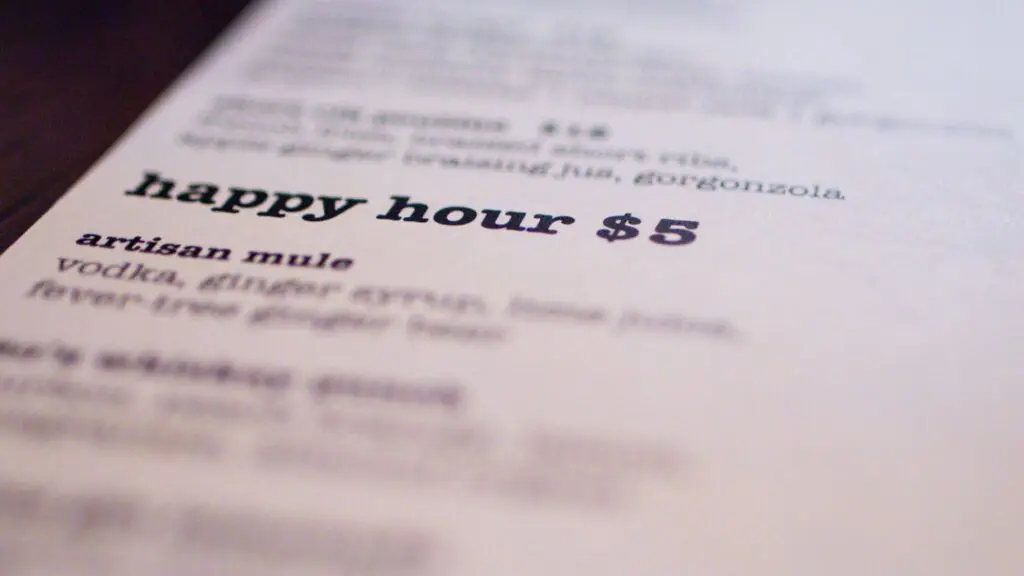
The Naperville Liquor Commission at its meeting Thursday unanimously voted to recommend removing the city’s restrictions on happy hour, a matter which will now go to Naperville City Council for consideration.
Naperville upheld happy hour ban in 2017
In 1989, Illinois established a statewide ban on happy hour with the intent to curb binge drinking. In 2015, the state updated laws to allow happy hours at bars and restaurants with restrictions.
However, the Naperville Liquor Commission voted in 2017 to keep the local prohibition in place.
At the group’s Thursday meeting, Commissioner Steve Chirico explained that the commission’s decision to uphold happy hour restrictions in 2017 was largely due to safety concerns regarding incidents with late-night drinking, especially in downtown Naperville.
“Things got out of control. A lot of fights. This was when social media just started getting really, really popular, and all of a sudden, this stuff was flying around about Naperville and how unsafe it was at night,” Chirico said.
He explained how restaurant managers and Naperville dining groups came together to try to curb those issues.
“I think that there was a hesitancy on the commission’s part to do anything that might reverse the positive trend that we were experiencing,” Chirico said about their decision on happy hour in 2017.
Illinois’s current legislation allows bars and restaurants to offer happy hour promotions for up to four hours a day, not exceeding 15 hours per week. It also limits the kinds of discounts offered, like banning two-for-one deals.
Happy hour competition with other cities
Several local restaurant managers and other Naperville dining representatives expressed their support of amending the city’s happy hour restrictions.
“The people who come in looking for happy hour are disappointed and walk away and don’t buy anything,” said John Zydowicz, general manager at Davanti Enoteca, adding that visitors are “holding the restaurant responsible” for the lack of happy hour.
Kevin Reed, vice president of operations for Biaggi’s and Ancho & Agave, shared about a couple that came into Ancho & Agave in February looking for happy hour specials. When the restaurant explained that they didn’t have any because of the city law, the couple said they were going to another city entirely.
Monica Conners, president of Naperville Development Partnership, spoke in representation of several chain stores that had shared difficulties with the different happy hour laws in Naperville, such as marketing strategies.
“A lot of our chain restaurants actually can’t come today because they’re part of a national corporation, but they’ve expressed challenges because we’re one of the few communities nationally that don’t offer happy hour,” Conners said.
Happy hours support business finances
Naperville business advocates said such promotions could be helpful during slow hours, which typically fall in the mid- to late-afternoon when happy hour deals usually run.
Christina Kitchel from Caton Commercial Real Estate Group spoke on behalf of her downtown Naperville clients. She noted the business vacancies in downtown Naperville particularly and said these happy hour deals might help her clients cover expenses.
“Especially when lease rates, when expenses, when overhead and everything is at an all-time high, they can’t just rely on those peak hours,” Kitchel said. “So I think anything that can help entice people to come through the door is really important at this moment.”
Addressing 2017 concerns
Chirico said that in 2017, one of the commission’s concerns was that younger guests would take advantage of happy hour discounts, contributing to the drinking issues the city had at the time.
Zydowicz said his typical happy hour patrons are around age 40 or older. Kitchel said her clients usually serve working citizens during that time, not younger college-age students.
Speakers also addressed how times have changed since the law was first introduced in 1989, and even since Naperville decided to keep the law in 2017. They noted the popularity of rideshare services like Uber, new technology for checking I.D.s and better training for servers.
Late-night discounts prohibited
The representatives present at the meeting largely agreed that the happy hours they are looking for would be between 3 p.m. and 7 p.m. However, Anthony Vai, co-owner of VAI’s, said late-night discounts help offset costs.
“While yes, [happy hour] is made to bring people in during those off hours, those off hours are not strictly just in the middle of the daytime, between lunch and dinner, but also as dinner falls off,” Bach said.
Chirico said he did not agree with allowing promotions after dinner.
“I think some of the concerns we had in Naperville have been remedied in the rules we put in place,” Chirico said. “I would not support the comment that was said that they do happy hour an hour and a half before close. That would go directly against what we were trying to prevent before.”
Commission recommends adopting state laws with earlier hours
Chirico moved to recommend the city mostly adopt state laws for happy hour, which was unanimously passed.
However, the commission unanimously decided to make one adjustment in Naperville’s law, changing the happy hour cutoff from 10 p.m., as allowed by the state, to 7 p.m.
Commissioner Jason Dy suggested that if the recommendation passes through city council, the commission revisit happy hour laws in one year to assess how businesses and the community have been impacted.
The decision moves to city council to be voted on at a future meeting.
If you have a story idea, send us a tip!