
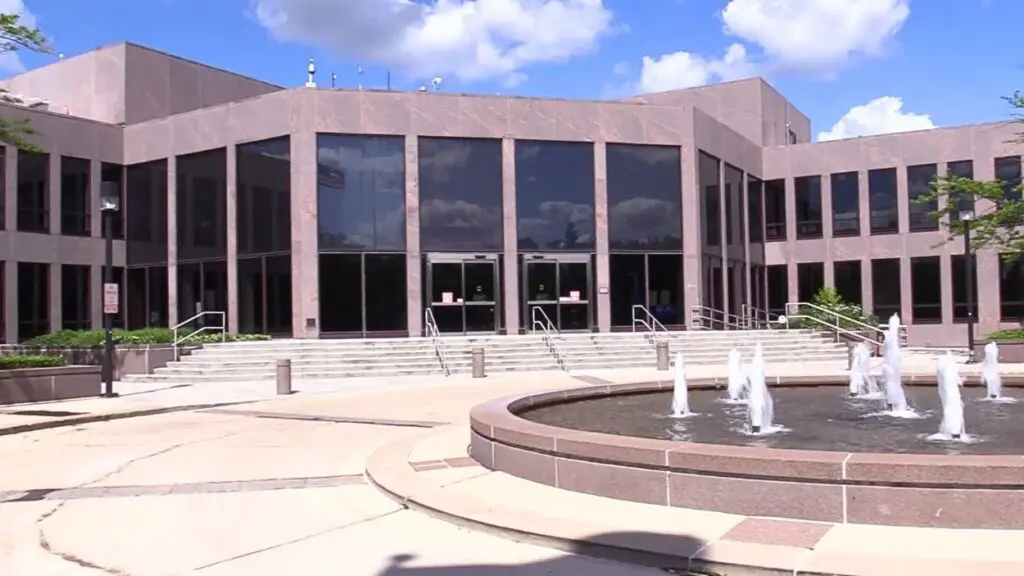
The Naperville City Council took the first steps in having a “due process and municipal property” ordinance added to the municipal code at a meeting on Tuesday, May 19. It came before municipal decision-makers against the backdrop of U.S. Immigration and Customs Enforcement activity this past year.
A first reading of the ordinance was approved on a 6-3 vote at the meeting, paving the way for a second, and potentially final, reading of the document at an upcoming meeting.
City attorney gives legal opinion, issues draft ordinance
Last month, the city council directed city staff to prepare a report on the strategies and policies Naperville has taken, to date, on immigration enforcement. City Attorney Michael DiSanto issued the report at the recent meeting, suggesting one of four options as next steps:
- Prepare an ordinance for a first reading, imposing limitations on city property and city staff members’ reporting obligations
- Prepare a resolution that DiSanto described as “symbolic” and an affirmation of Naperville values and the municipality’s compliance with Illinois legislation, including the TRUST Act
- Lobby federal and state lawmakers about recent ICE activities and due process protections
- Take no formal action and instead maintain focus on internal staff training
The first of the options — the ordinance that is in motion — received the majority support on the council and was the basis for the action taken.
As drafted, it includes a number of provisions, including discouraging use of city-owned and city-controlled property as staging areas for immigration enforcement activity, prohibiting city staff members’ onsite support of such activities, and requiring documentation of any observed violations.
Throughout his report, DiSanto emphasized the city is not in a statutory position to bypass federal or state authority, and none of his recommendations would support such actions.
“The City of Naperville has no authority to override or obstruct federal operations, but maintains strong policies focused on public safety, constitutional protections, and compliance with Illinois law,” DiSanto wrote in the report.
There are several documents already on the books within Naperville that serve as the backbone to the city’s approach to immigration-related matters, DiSanto noted.
A general order within the Naperville Police Department, for instance, states local officers serve “all persons in the city, regardless of citizenship or immigration status and recognizes that civil immigration enforcement is exclusively a federal responsibility.”
DiSanto also noted in the report that former Mayor Steve Chirico in 2017 issued a proclamation declaring Naperville “a community of unity and acceptance,” which has been a bedrock of the municipality’s approach toward equal treatment and access across all city departments.
Council comments on support, disapproval of ordinance
Mayor Scott Wehrli and Councilmembers Josh McBroom and Nate Wilson voted against the ordinance’s first reading. Councilmembers Mary Gibson, Ian Holzhauer, Supna Jain, Patrick Kelly, Ashfaq Syed, and Benny White supported it.
Wehrli remarked that the city staff report showed Naperville is already doing what federal and state law requires “and more.” He expressed reservations about proceeding with the proposed ordinance, sharing concerns that it could deter local police from addressing issues within Naperville that are expressly within their purview
“I believe that Naperville’s reputation as one of the safest cities in America was built on the premise that politics have no place in public safety,” Wehrli said. “I don’t see why we would deviate from the track record.”
McBroom also shared reservations with the ordinance, asserting it essentially is a symbolic gesture and could lead to similar types of requests from other advocacy groups in the road ahead.
“The fact that this ordinance wouldn’t change anything — I think it’s a very slippery slope,” McBroom said. “I hope my colleagues are not acquiescing to political pressure to make a statement.”
But other members on the dais took a different perspective and said the ordinance responds to concerns raised by some residents and is an attempt at curbing fears that have been shared.
“I don’t think it’s something that’s just symbolic,” Jain said. “I think there is a need for clarity. There is confusion. There is lack of trust.”
White described the document DiSanto presented to the council for consideration as a “very well-written ordinance.”
“I think, we as a community, as an organization, sometimes we don’t like the process that’s being used oftentimes,” White said. “We also should recognize that if we’re patient, and we actually play the process out, we will normally get good results. That’s what I’m seeing right here.”
Residents and advocates weigh in on ordinance
Mirroring turnout at recent meetings, the council heard from more than a dozen residents and local advocates in other communities who supported taking a formal step for a due process ordinance.
Lili Burciaga, president of the Alliance of Latinos Motivating Action in the Suburbs, was one of multiple speakers who advocated for the ordinance, suggesting it is based on legal grounds because it does not attempt to override federal authority.
“That distinction matters,” Burciaga said. “Federal law remains the supreme law of the land. This ordinance is not about overriding federal authority, or preventing lawful federal enforcement. It is about how Naperville chooses to manage its municipal property and resources locally.”
If you have a story idea, send us a tip!