
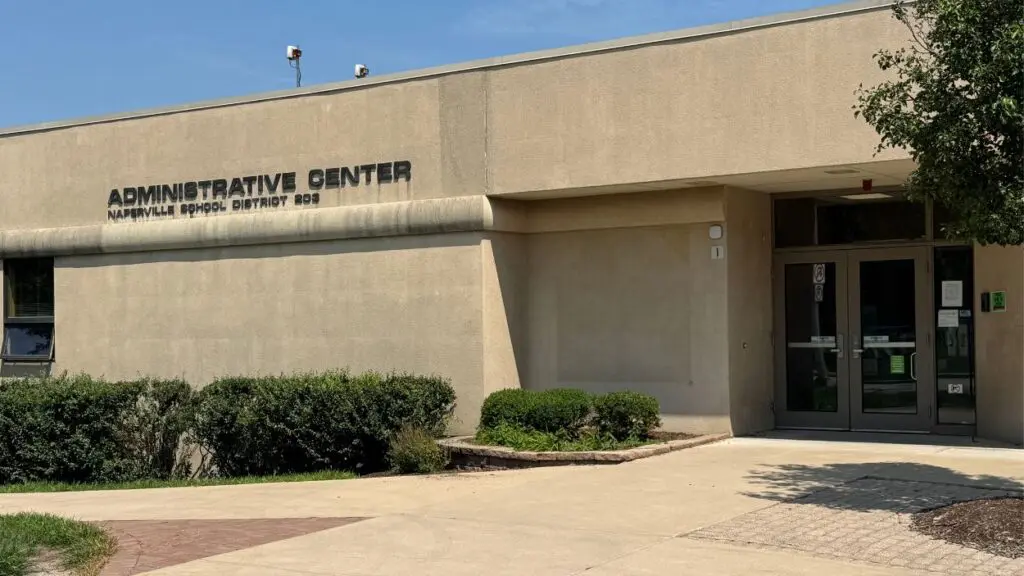
Naperville School District 203 officials are considering a proposed 3.8% increase in the 2025 property tax levy, based on recently released information.
As is the case with all local taxing jurisdictions across Illinois, Naperville 203’s board of education will vote in December on a 2025 levy resolution that will be forwarded on to county clerks in anticipation of next year’s tax bills.
More than 85% of Naperville 203’s revenue annually is derived from local property taxes.
CPI, EAV and new construction all part of equation
Michael Frances, Naperville 203’s chief financial officer, provided a presentation on the proposed 2025 property tax levy at a board of education meeting Monday, Nov. 17. The board will vote on the resolution at its next meeting Monday, Dec. 15.
While Naperville 203’s proposed $315.13 million 2025 levy request represents a 3.8% increase, Frances said there are several intricacies within Illinois law in place.
“There are a number of variables that are used in determining the amount of the annual tax levy,” Frances said.
Existing property owners, for instance, could be subject within the proposal to a 2.9% levy increase, which is the amount tied to the consumer price index last year and plays into Illinois’ tax cap law. The additional increment is designed to capture new construction within the past year that is being added to the tax rolls.
Another important piece of the puzzle is the equalized assessed value rate, which is a figure used in calculating property taxes.
What is and is not currently known within the levy
While state law requires local taxing authorities file an annual levy resolution with county clerks by the final Tuesday in December, final numbers are not calculated until the spring before tax bills are sent out.
Of the three components that tie into the levy, Frances said only the CPI figure is known. The district is currently working off estimates for new construction and EAV figures.
“We work with our local tax assessors, who have been helpful in providing the estimates for our calculations,” Frances said. “Those numbers will not be finalized and released until March.”
More realistically, Frances said he is projecting a total levy increase of 3.4%, but he is requesting the board adopt a levy resolution reflecting the 3.8% increase so Naperville 203 can capture all of the new construction and EAV growth from the past year.
Final levy figures can be lowered in the spring, based on the December resolution, but they cannot be increased, which Frances said is the rationale behind the higher-than-expected levy increase.
What the levy increase means to property owners
In his preliminary presentation, Frances noted the impact of levy increases could play out differently on tax bills throughout the district’s geographic footprint.
“Individual property tax bills may differ,” Frances said. “Different assessment changes, and whether an individual property assessment change is less than or greater than the average change, districtwide, can cause a single tax bill to be less than or greater than the average increase.”
Board member Amanda McMillen requested Frances provide a snapshot of what the 2.9% levy increase might mean for the average homeowner within Naperville 203.
“I just like to know, directly, what would be the impact for our taxpayers, as close as you can,” McMillen said to Frances. “I understand the contingencies with the new development, but I just think it’s important to have that breakdown.”
Frances indicated he could provide the information when the levy discussion resumes Dec. 15, and the board votes on the requisite resolution.
“We certainly can calculate that,” Frances said. “I don’t have the number off the top of my head.”
If you have a story idea, we want to hear from you!