The U.S. Department of Agriculture has posted a notice on its website that federal funding for Supplemental Nutrition Assistance Program benefits will stop on Nov. 1, leaving millions of families at risk. As the government shutdown heads into its fifth week, local food pantries are bracing for a sharp surge in demand.
Naperville-area food pantries like Loaves & Fishes Community Services and West Suburban Community Pantry are preparing for the impact. They expect families to seek help from their distribution centers, as SNAP benefits supplement the grocery budget of low-income households.
Loaves & Fishes prepares to help Naperville-area SNAP households
Loaves & Fishes reported that in their four-county service area (DuPage, Kane, Kendall, and Will), just under 114,000 households, or about 220,000 people, receive SNAP benefits, commonly known as “food stamps.” Illinois’s largest and most impactful food pantry, the organization served just over 484,000 people this fiscal year.
Because SNAP benefits are 100% funded by the federal government, the state lacks the budgeted funds to cover these expenses. Over 1.9 million Illinois residents receive SNAP benefits.
In preparation for the pause of SNAP benefits, Megan Lynch, the executive vice president of advancement for Loaves & Fishes, said they will maximize distribution efforts across all sites to prepare for the increased need. The Aurora distribution center serves as the hub for Loaves & Fishes, with 13 other distribution locations in the area receiving resources from it.
“And to give some context, back in 2021, when we opened our Aurora distribution hub, we were serving more like 3000 people a week, so our numbers have already tripled, and we’re really close to capacity with our current facilities. And when we look at numbers like these, it could be a pretty dramatic impact, potentially a crisis situation, if we have that many people who then have to turn to food pantries for support. So it is something we are watching very closely, “ Lynch said.
Additionally, the pantry is collaborating with other food pantries and the Northern Illinois Food Bank to buy food, lowering costs for each organization and increasing food pantry stock.
Other programs in Loaves & Fishes may be affected
SNAP reductions may not only affect the food distribution side of the Loaves & Fishes. The CARES program, a service that promotes self-sufficiency, connects low-income families with public benefits, including SNAP.
The organization does not know if or how the CARES program could be affected at this time.
“SNAP is a proven way to help make a meaningful difference in the lives of those who have this need and who are food insecure,” Lynch said. “And it has so many positive ripple impacts in terms of their mental health, physical health, and ultimately their mental health, so that they can stay housed when there are people who are choosing between paying rent and paying for food.”
West Suburban Community Pantry discusses extended hours
The West Suburban Community Pantry is considering how to meet the needs of families, including extending hours for distribution days and increasing food purchases for the coming months.
The pantry currently holds distribution days on Tuesday, Thursday, and Saturday from 9 a.m. to 1 p.m. The pantry has had a shortage of volunteers, which shortened the hours from 3 p.m. previously. However, CEO Maeven Sipes said they will continue to assess if they have the resources to be open longer ahead of the expected demand.
Additionally, the pantry will be able to increase food purchases for the coming months due to under-budget spending earlier this fiscal year. Though their distribution days require appointments, the pantry’s online market allows families to schedule a pick-up or delivery. The pantry will promote the online market to balance the demand for in-person services.
This year, the West Suburban Community Pantry served 1,000 families per week. Sipes reported that a quarter of those they serve receive SNAP benefits.
“Unfortunately, it’s a situation where anybody can find themselves, where a pantry can be helpful for them,” Sipes said. She noted that low-income households don’t always have savings, and any emergency could deplete their resources.
“It’s just families trying to figure out, ‘How can I balance my resources, and how can I stretch them?’” Sipes said. “And coming to a food pantry allows them to either supplement what they are spending at the grocery store or have enough food for their families, and then they’re able to use their resources for other bills or things that they’re not able to get covered.”
Community can help food pantries meet increased need
Both pantries need support from the community at this time.
“Monetary donations are really the way that the pantry can be most flexible,” Sipes said, “and for every dollar we receive, we can provide more than one meal, so it can stretch pretty far, and we’re able to use it how we need it.”
West Suburban Community Pantry also accepts food donations, as 75% of its food is donated. The pantry hosts an annual Harvest Week Food Drive, which is from Nov. 2 to Nov. 9 this year.
In trying to extend hours again, Sipes also noted the need for volunteers.
“If you’re not in a position to maybe make a financial donation, if you’re able to donate your time, you can also have a big impact that way,” she said.
Lynch stressed the importance of monetary support, noting that the organization recently launched a Hunger Action Fund to help meet the expected surge in demand. Community members can contribute by donating directly to this new fund or by participating in Loaves & Fishes’ virtual food drive.
“We are looking to the community to continue to help us and partner with us on addressing the increased need to ensure that all of our neighbors have access to the food and support services they need to thrive,” Lynch said.
The future of SNAP benefits remains uncertain
As uncertainty continues over the length of the government shutdown and updates on SNAP benefits are constantly changing, Lynch emphasized the importance of this issue and its impact on the Naperville community.
“We are hoping that the government will come together and address this,” Lynch said. “Really, food is a human right, and both sides of the aisle have worked together on addressing food insecurity.”
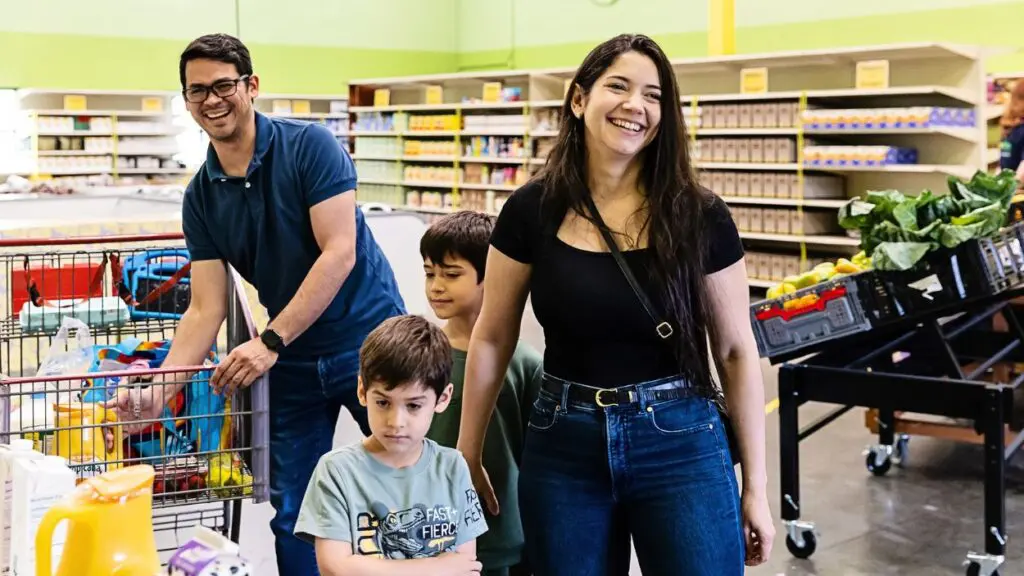
Photo courtesy of Loaves and Fishes Community Services
If you have a story idea, we want to hear it!