
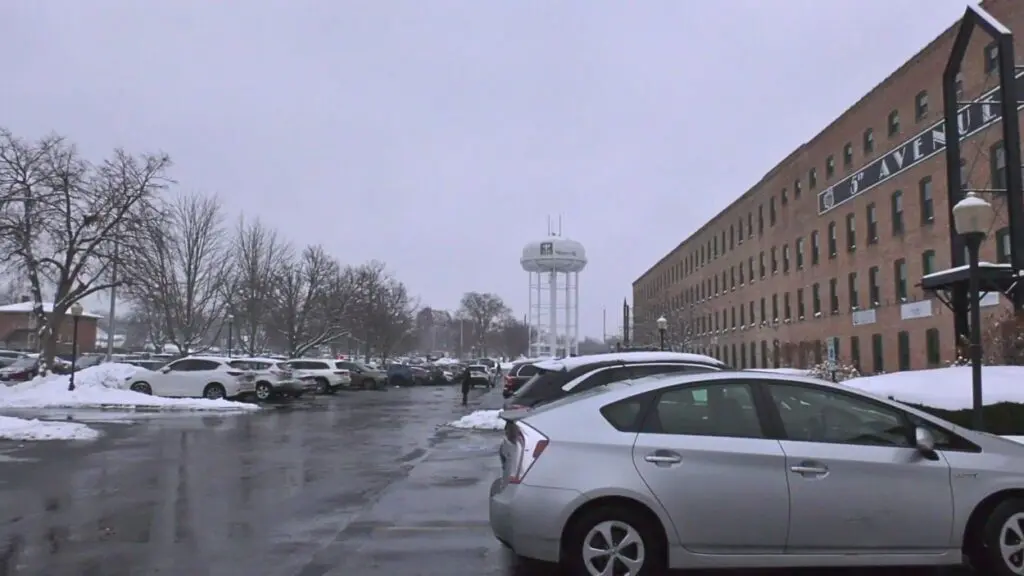
The organization tapped to assist Naperville officials with exploring options for the future of the 5th Avenue area has issued its final report.
The 24-page document is the culmination of a renewed discussion that was advanced a year ago of potentially redeveloping city-owned properties near the Naperville Metra Station and reimagining the swaths of commuter parking spaces that currently occupy the area.
‘A tremendous opportunity for the City of Naperville’
The Urban Land Institute Chicago was commissioned to study the future possibilities of the 5th Avenue Area. Much of the organization’s work took place this summer, with a high-level discussion of findings taking place in September.
ULI Chicago representatives at the time indicated that the full report on its findings was forthcoming, and the document was released earlier this month.
An 8-person panel of experts in different disciplines and professions took part in the study, and the consensus among the group — as outlined in the document — is a unique opportunity could be on the horizon for a high-profile piece of property.
“The 5th Avenue study area presents a tremendous opportunity for the City of Naperville to transform acres of uninspired parking lots into a vibrant new neighborhood, enhancing residents’ quality of life and visitor experience,” the panel wrote in the report.
“The panel believes that a collaborative and bold, yet incremental, approach can help Naperville successfully navigate evolving market conditions and attract development that serves community needs, is context sensitive, and fiscally responsible.”
Key redevelopment steps outlined in report
While Naperville leaders could take multiple pathways as next steps are considered for the future of the 5th Avenue area, the ULI Chicago report outlined three specific steps that could serve as an important guide toward planning for the future of the site. The list of recommendations includes:
- Master plan: Developing a formal master plan document, the consultants note, can establish a framework for next steps in the visioning process. ULI Chicago recommends the city hires a third-party consultant to instill public confidence in the overall planning process. The plan could incorporate shared visions and goals for the area, potential public infrastructure improvements, and development phasing.
- Transparent developer solicitation process: The panel also recommends the city go through formal competitive bidding request for qualifications (RFQ) and request for proposals (RFP) processes as developers are brought into the fold.
- Establishing a TIF district: A tax-increment financing (TIF) district could serve as a financial lever, the panel noted, with addressing such redevelopment costs as stormwater management, streetscaping beautification improvements, site remediation, and traffic calming measures. The panel recommended the city conduct a study to explore the feasibility of establishing a TIF district in the area.
The recommendations also included specific areas of concentration, such as a top-down review of how much commuter parking actually is necessary in the 5th Avenue area. Right-sizing parking, the panel noted, “can play a key role in managing future development costs.”
“With hybrid work schedules continuing to be popular, 80% of the current commuter parking capacity in the study area may be sufficient in the future,” the panel added. “However, to develop data-based estimates for future commuter parking, Naperville should partner with Metra to analyze ridership patterns, projections, and parking capacity at both Naperville stations — 5th Avenue and Route 59.”
Takeaways from community conversations
Interviews with a range of nearly 125 community stakeholders was a key part of ULI Chicago’s study for the 5th Avenue Area, the consultants noted in the report. Residents and city officials took part in the interviews.
The ULI Chicago panel indicated a number of key takeaways were collectively gleaned from the individual interviews.
A number of interviewees, for instance, took aim at the prior planning process that got underway seven years ago, with Ryan Companies at the helm of the effort at that time. It ultimately was stalled in 2020 without a successful development proposal. Some interviewees, as noted in the report, criticized the past process for a perceived lack of transparency.
“Stakeholders expressed reservations with awarding the entire project to a single developer, and in the absence of well-defined development goals and parameters set by the city, found the process being driven by Ryan Companies, rather than by Naperville,” the panel wrote.
The conversations among the stakeholders also resulted in several big-picture themes. The panel recommend city decision-makers consider them as future development plans are considered. Neighborhood character against the backdrop of height and density was one concern raised, as was school capacity, the future of commuter parking, and traffic congestion.
If you have a story idea, we want to hear from you!