
After months of deliberation, the Naperville City Council solidified its spending plan for the upcoming fiscal year. The city’s 2026 budget in the amount of $685.34 million was officially adopted at a meeting Tuesday, Dec. 2.
The finalized spending plan for the year ahead is a 6.8% increase from the 2025 amended budget, Finance Director Raymond Munch noted.
MCIT addition was approved in November
Deliberations of what should and should not be incorporated into Naperville’s 2026 budget took place over a two-month span, beginning in late September and continuing through late November.
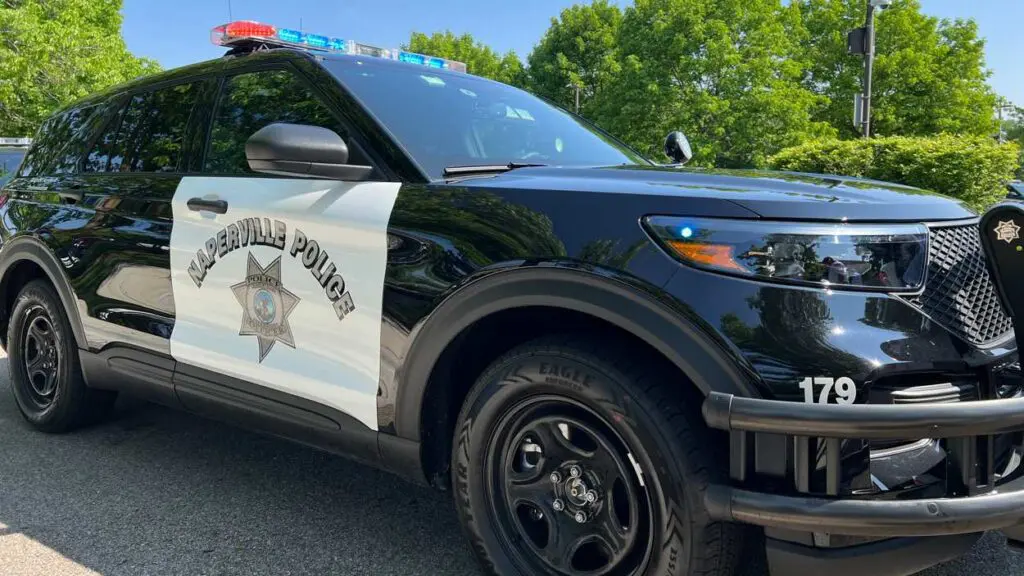
A decision was made last month to add $1.17 million into the 2026 budget to fund a mobile crisis intervention team for the Naperville Police Department.
“The MCIT program will be budgeted as a recurring expenditure in the general fund, with some initial, one-time expenditures in the capital projects fund,” Munch wrote in a memo, explaining details of the amended budget.
The addition of the MCIT within the Naperville Police Department includes a number of committed expenses, including $854,589 in salaries and benefits, $230,700 for vehicles, and $58,600 for equipment.
A number of council members, including Councilman Ian Holzhauer, recommended moving forward with the MCIT program in 2026.
“Just to be crystal clear, public safety, mental health, taking care of our victims, are core city services,” Holzhauer said at the council’s Nov. 18 meeting as the MCIT was added into the city budget on a 7-2 vote.
“A lot of times, these victims — they’re young, they can’t vote, they’re scared to talk about what happened, they’re ashamed,” Holzhauer said. “They don’t have an advocate out there, the way that people for other causes do, and they rely on us to advocate for them.”
Public weighs in on budget plan at hearing
Prior to adopting the finalized 2026 budget, the council held a formal public hearing. Two residents weighed in on the spending plan for the year ahead.
Resident Sam Entile implored the council to consider lowering taxes with corresponding cuts to the municipal budget. He pointed to comparable cities elsewhere in the U.S. — Akron, Ohio; Eugene, Ore.; and Syracuse, N.Y. — as examples of municipalities that have recently trimmed their budgets amid the inflationary environment.
In his remarks, Entile pointed to financial stress as a leading cause of mental health crises within families.
“Rather than getting to the heart of any mental health issues, this planned solution was to contribute to families’ stress,” Entile said in reference to adding the MCIT expenses into the 2026 budget. “People cannot continue to be nickel and dimed — especially in an age of inflation.”
Resident Tim Ferritto also provided public comment, pointing out motor fuel taxes, which add to the price at the pump through federal, state, county, and municipal fees.
Speaking to gas taxes in Illinois, Ferritto commented, “It’s one of the highest ones in the country.”
Details of Naperville’s finalized 2026 budget
Munch provided an analysis in his memo of a few structural changes to the overall 2026 budget as the MCIT program was added.
“For the general fund to support the MCIT program, the corporate (city services) portion of the property tax levy will need to increase by 9.0% to $10,079,751. The city’s property tax rate remains lower than in previous years.”
In the memo, Munch also outlined changes to the city’s capital budget for the year ahead as added costs were incorporated into it for the rollout of the MCIT program.
“Staff decreased the capital expenses budget for the fire department by $400,000, the department of public works by $500,000, and the library by $60,000,” Munch indicated.
Several reasons were cited for the adjustments, with some of the reasons being budgetary modifications from one year to the next.
“The fire department included the amount in their original submission for living quarter renovations and training facility upgrades,” Munch noted, singling out one of the examples. “The living quarters project was moved to a later year, while training facility upgrades were covered under another item in the budget.”
With the budget in place, the council will hold a hearing and adopt the 2025 property tax levy at its next meeting Tuesday, Dec. 16.
If you have a story idea, we want to hear from you!