
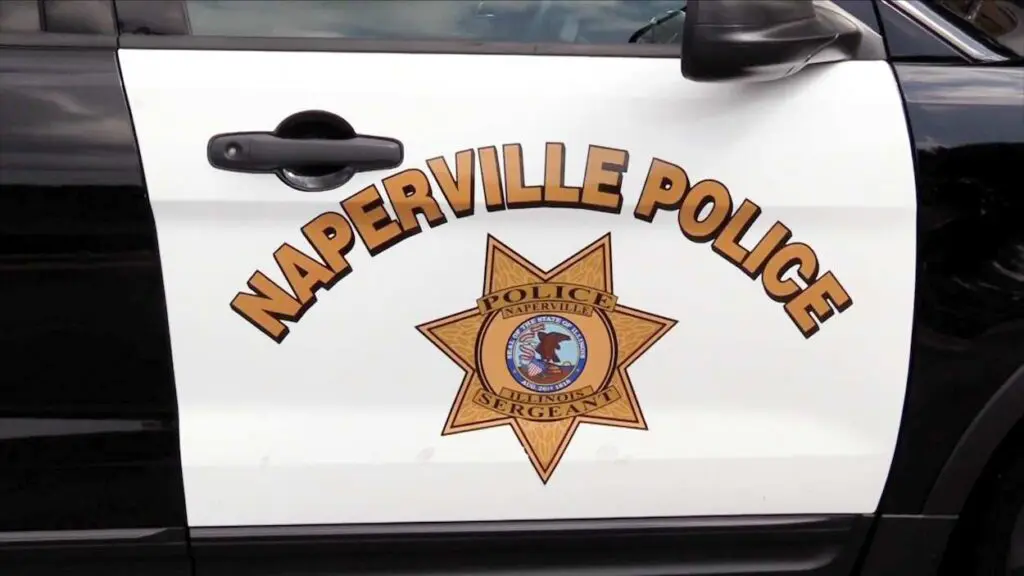
The potential addition of a Naperville police initiative that did not come to fruition this year was one of multiple issues discussed as city officials hashed over the proposed 2026 municipal budget at a workshop Monday, Nov. 10.
Naperville department heads have been meeting with the council over a series of workshops this fall in anticipation of next year’s municipal budget, which kicks in Jan. 1. The proposed city operating and capital improvement program budgets combined clock in at $685.13 million, representing a 6.8% increase from this fiscal year.
Councilman Holzhauer seeks addition of MCIT program
The most recent budget workshop — the city’s third and final — included a few additional discussion points, including a request from Councilman Ian Holzhauer to add into the 2026 operating plan funding for a Mobile Crisis Intervention Team within the Naperville Police Department budget.
Holzhauer had advocated for the MCIT a year ago, amid 2025 budget deliberations, though the spending allocation did not ultimately come to fruition this calendar year because of other fiscal considerations within the department.
He said there are plausible reasons for including the program in the 2026 budget, including opportunities to address mental health.
Assembly of the 2026 budget proposal was deemed challenging — a talking point raised in prior budget workshops — and Finance Director Raymond Munch said some of the funding considerations that were on the table this year, such as the MCIT, were met with a “wait and see” approach.
“The 2027 budget should be one where you can start to take a look at those programs that we just didn’t have the ability to include this year,” Munch said.
In response, Holzhauer said, “I just respectfully disagree. I don’t think child sexual abuse reduction is a wait-and-see program. I don’t think that’s a bell or whistle. Sometimes we make hard decisions to vote for things that are right for the community.”
Councilman Josh McBroom, by contrast, said he favored a more cautious approach toward the 2026 budget and did not favor incorporating additional programs into the budget at this time.
“I’m looking at this general fund, and I agree with Director Munch — this is probably his most challenging budget he put together,” McBroom said.
Other council members, including Councilman Patrick Kelly, acknowledged the fiscal considerations in play, but also noted the merit in a program such as the MCIT.
“I don’t think the situation has changed today, compared to 12 months ago,” Kelly said of the MCIT. “Just as we thought it was necessary 12 months ago, I think that’s the case now.”
The fate of the MCIT program within the 2026 budget will be decided next Tuesday, Nov. 18, at the next regular council meeting. Based on a supportive show of hands, city staffers will assemble a report and outline various funding scenarios, based on officer headcount, for the program.
City Manager Doug Krieger said the report could be delivered to the council Nov. 18, so long as the decision dovetails into a specific tax levy amount to trigger the statutorily required notice of the proposed dollar figure in anticipation of a final vote in December.
Local gas tax expected to continue declining
A number of wide-ranging issues that feed into the broader municipal budget were hashed over amid the most recent budget workshop. The local gas tax, which has long been a revenue generator for Naperville’s bottom line, was discussed at the recent meeting.
City officials are anticipating a continuation of an ongoing trend where local gas tax revenues continue a downward slide. An anticipated $2.46 million in gas tax revenue was earmarked in the 2025 budet; the projection has been lessened to $2.40 million in the 2026 budget.
“I would attribute, probably a majority of that, to our having the highest consumption of EVs,” Councilman Benjamin White said of Naperville’s adoption of electric vehicles amid Chicagoland.
Krieger said he and other city officials are reaching out to state lawmakers in the hopes of bringing parity between EV and traditional gas users on the tax.
“It is one of our legislative initiatives,” Krieger said. “It is a problem; it is a problem that some other states have already solved. We are experiencing a more significant impact than most other communities, just because of our high EV adoption rate here. We will continue to work with Springfield to lobby for a fix. The system needs to be fixed, and will continue to get worse unless there is a change.”
A look at the 2025 property tax levy
The city’s proposed 2025 property tax levy, which will fuel the 2026 operating and capital improvement program budgets, is $59.73 million. The final figure will be solidified at the Nov. 18 council meeting.
The dollar figure on the table is 1.5% higher than the final amount levied in 2024. The proposal also includes $8.5 million toward debt service abatement.
Munch provided a possible snapshot of how a homeowner might be impacted by the levy proposal as presented. The average resident could pay $1,019 on the city’s line item within the tax bill, based on a median home valued at $579,200. The figure is a projected $84 less than the prior year, due to a declining tax rate.
But Munch offered a caveat, stating, “It is virtually impossible to predict what each homeowner will experience on their property tax bill as valuation is the primary factor in determining your individual bill.”
Budget deliberations began in late September with a deep dive into the city’s capital budget. In late October, the council looked into the operating budget and supported raising the Special Events and Community Arts fund cap to bring additional financial assistance to Naperville Community Television.
A formal public hearing on the 2026 budget proposal will be held at the upcoming Nov. 18 meeting. Budget adoption is scheduled for the council’s Tuesday, Dec. 2 meeting, while adoption of the 2025 property tax levy is scheduled for a vote on Tuesday, Dec. 16.
If you have a story idea, we want to hear from you!